
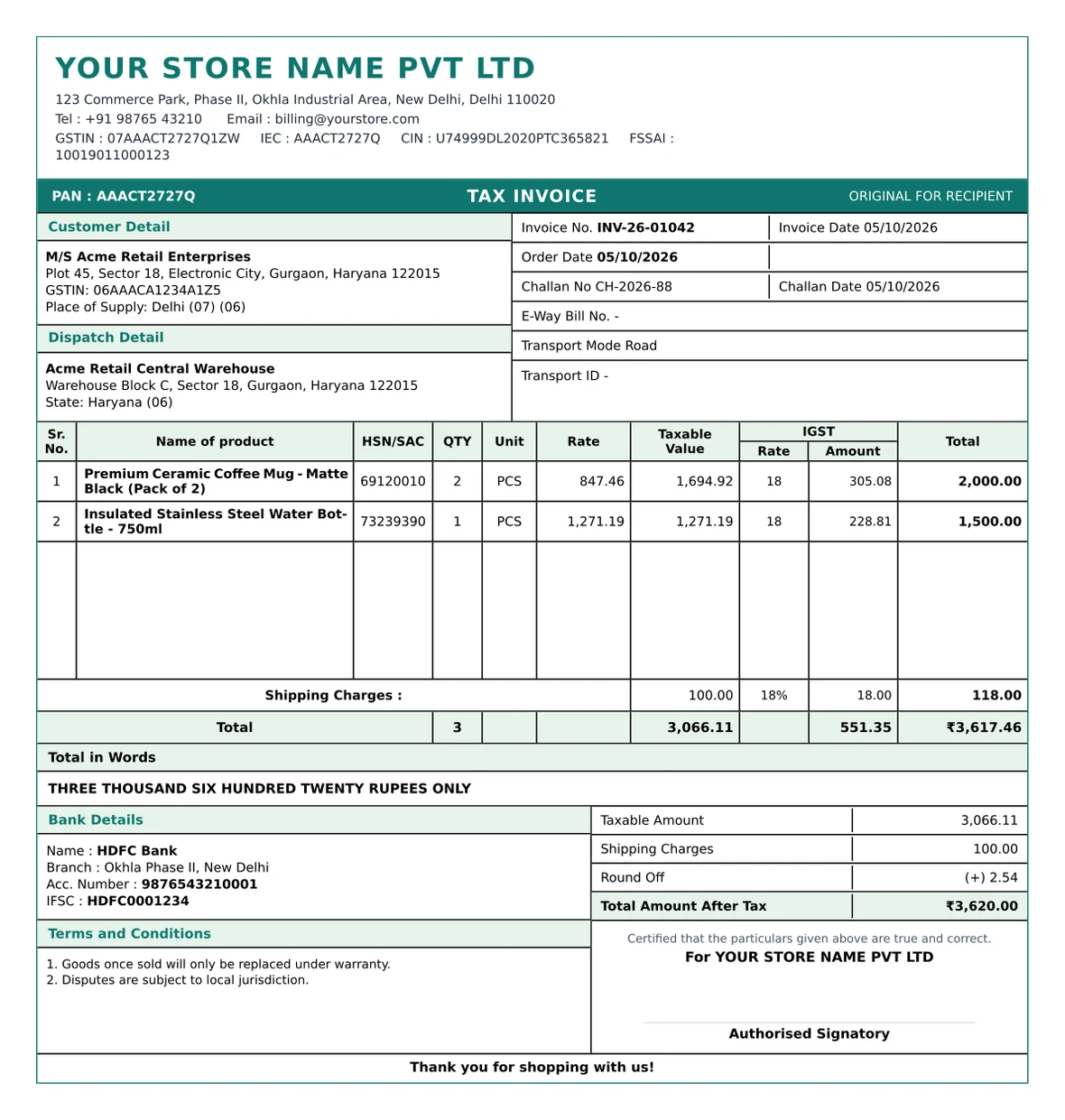
- Your name, address and GSTIN
- Invoice number, consecutive and unique for the financial year (max 16 characters)
- Date of issue
- Buyer's name, address and GSTIN (if registered)
- Delivery address, with state name and code, where required
- HSN code (goods) or SAC (services)
- Description of goods or services
- Quantity and unit
- Total value
- Taxable value, after discounts
- Rate and amount of CGST, SGST or UTGST, IGST and cess, shown separately
- Place of supply, with state name, for inter-state supplies
- Delivery address, if different from the place of supply
- Whether tax is payable on reverse charge
- Your signature or digital signature
Invoice numbering rules
- Up to 16 characters.
- Letters, numbers, hyphens (-) and slashes (/) only.
- Consecutive and unique for each financial year. Most businesses include the year, for example
INV/26-27/0001, and restart the counter each April. - Use one series per GST registration. You can run separate series, for example for exports, as long as each is consecutive.
Buyer details: registered and unregistered
For a registered buyer, show their name, address and GSTIN. For an unregistered buyer, show their name, the delivery address and the state name and code when the taxable value is ₹50,000 or more, or when the buyer asks for these to be recorded. In practice, most online sellers print the buyer's name and full address on every invoice anyway.
HSN code digits
| Aggregate turnover in the previous year | HSN digits on invoices |
|---|---|
| Up to ₹5 crore | 4 digits on B2B invoices (optional on B2C) |
| Above ₹5 crore | 6 digits on all invoices |
How many copies
For goods, Rule 48 asks for three copies: original for the recipient, duplicate for the transporter and triplicate for the supplier. Most invoice tools let you tick which copy you're printing. For services, two copies are enough.
When the format changes
- Sales under ₹200 to an unregistered buyer who doesn't want an invoice: you can issue one consolidated invoice at the end of the day.
- Composition scheme or exempt goods: you issue a bill of supply, not a tax invoice, and you don't charge GST on it.
- E-invoicing: if your aggregate turnover crossed ₹5 crore in any financial year since 2017-18, B2B invoices must be reported to the Invoice Registration Portal for an IRN and QR code.
- Credit notes: for returns and price reductions after the invoice is issued, you issue a credit note that refers to the original invoice.
Free GST invoice format PDFs
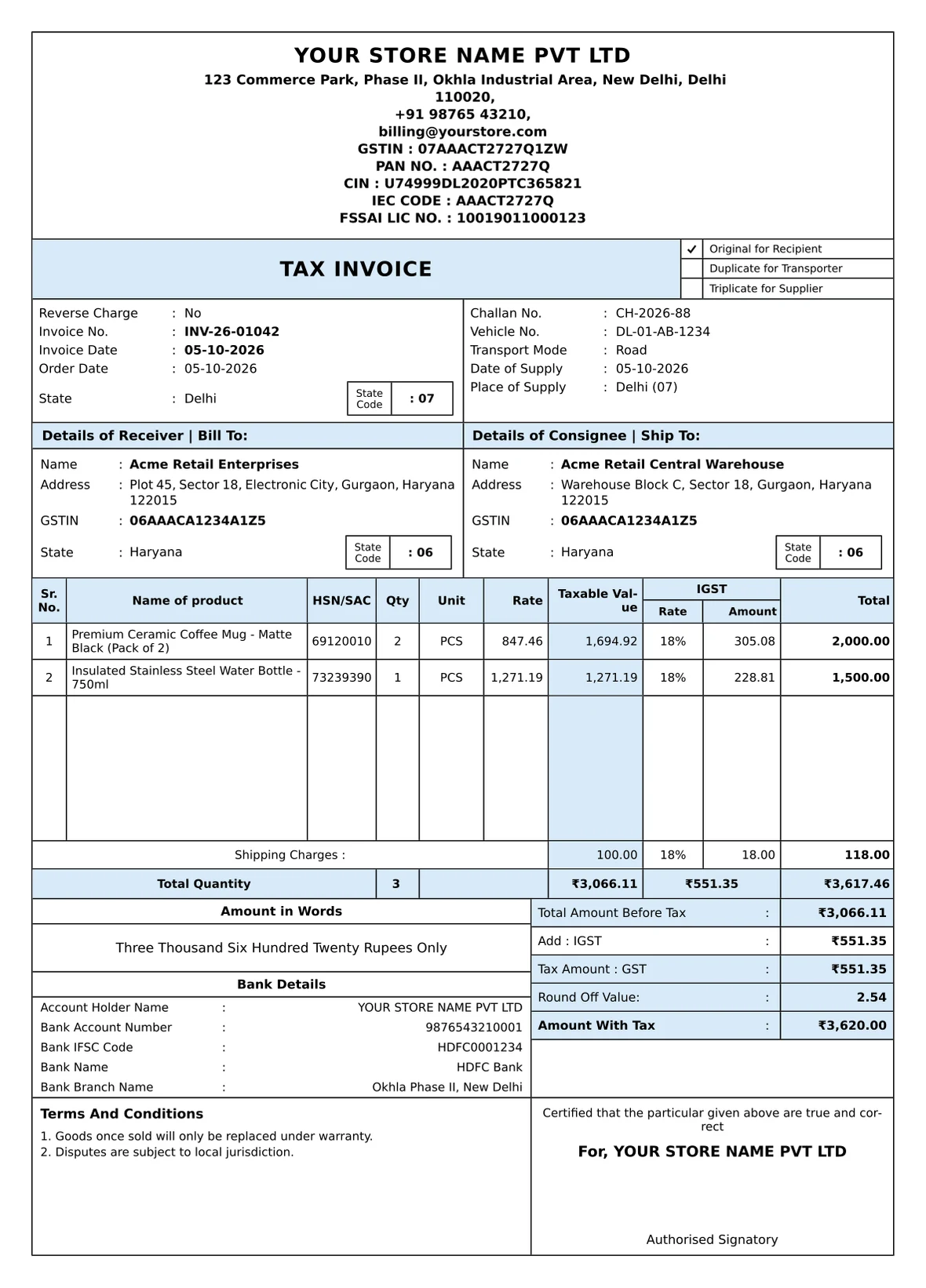
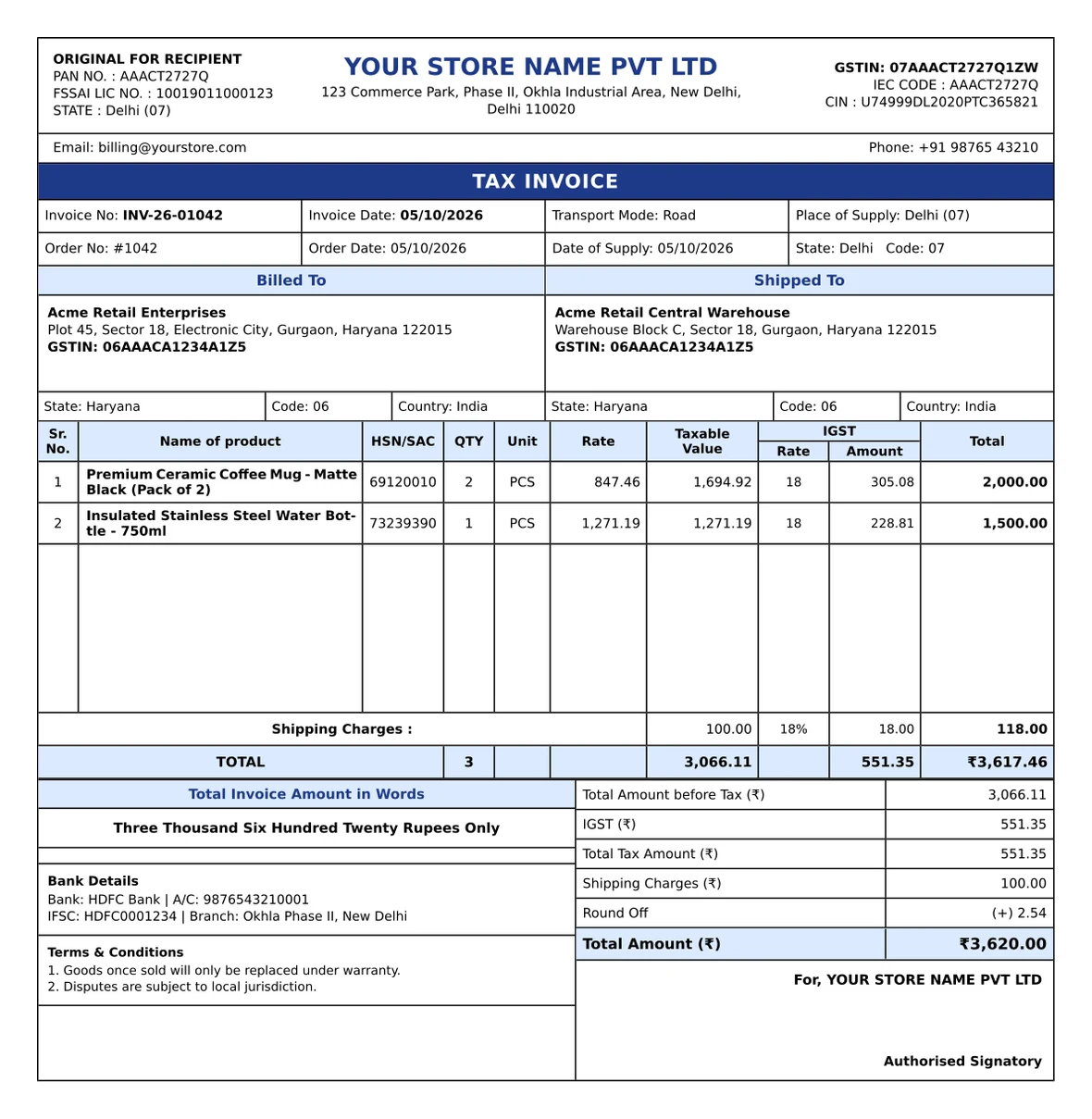
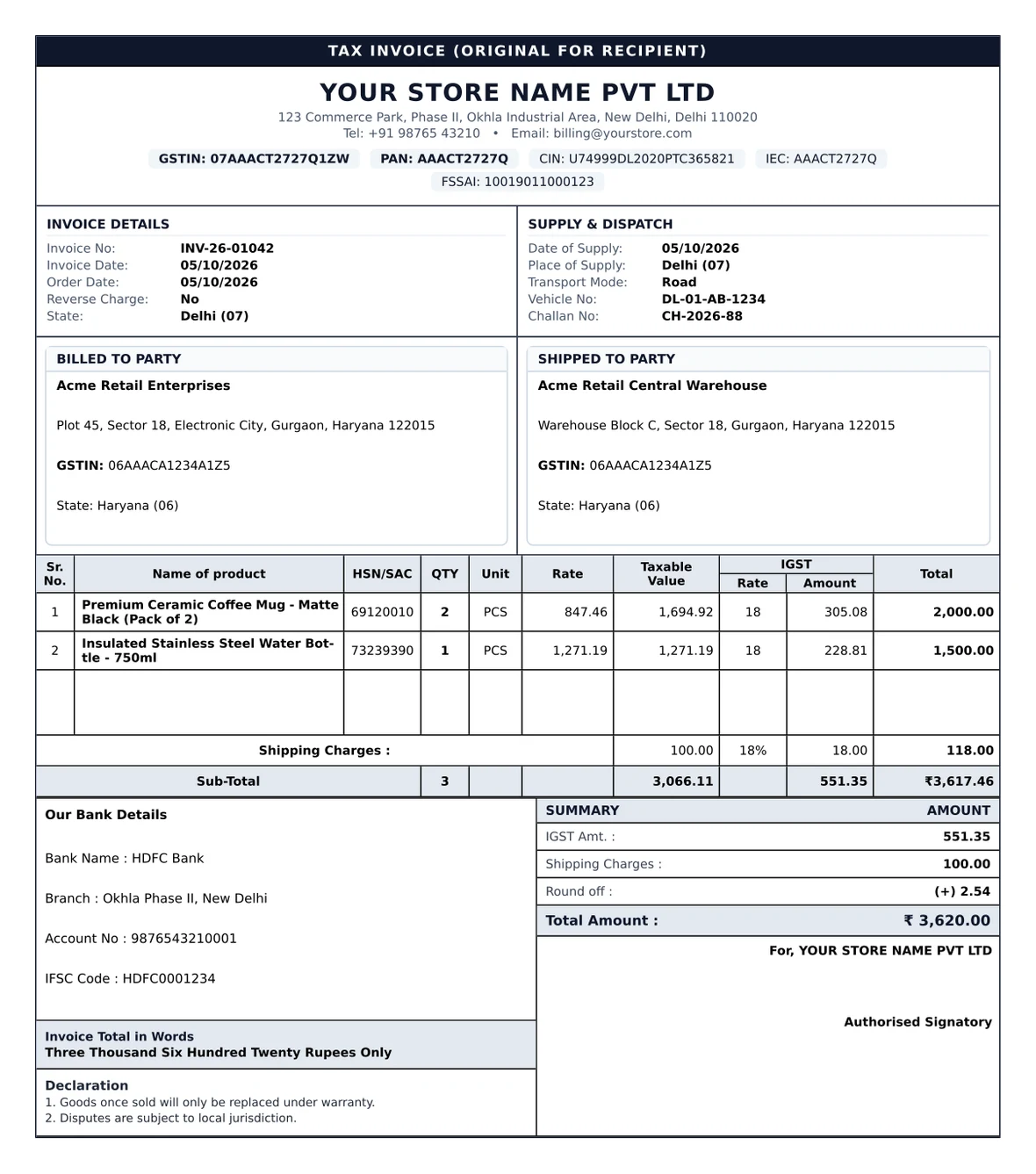
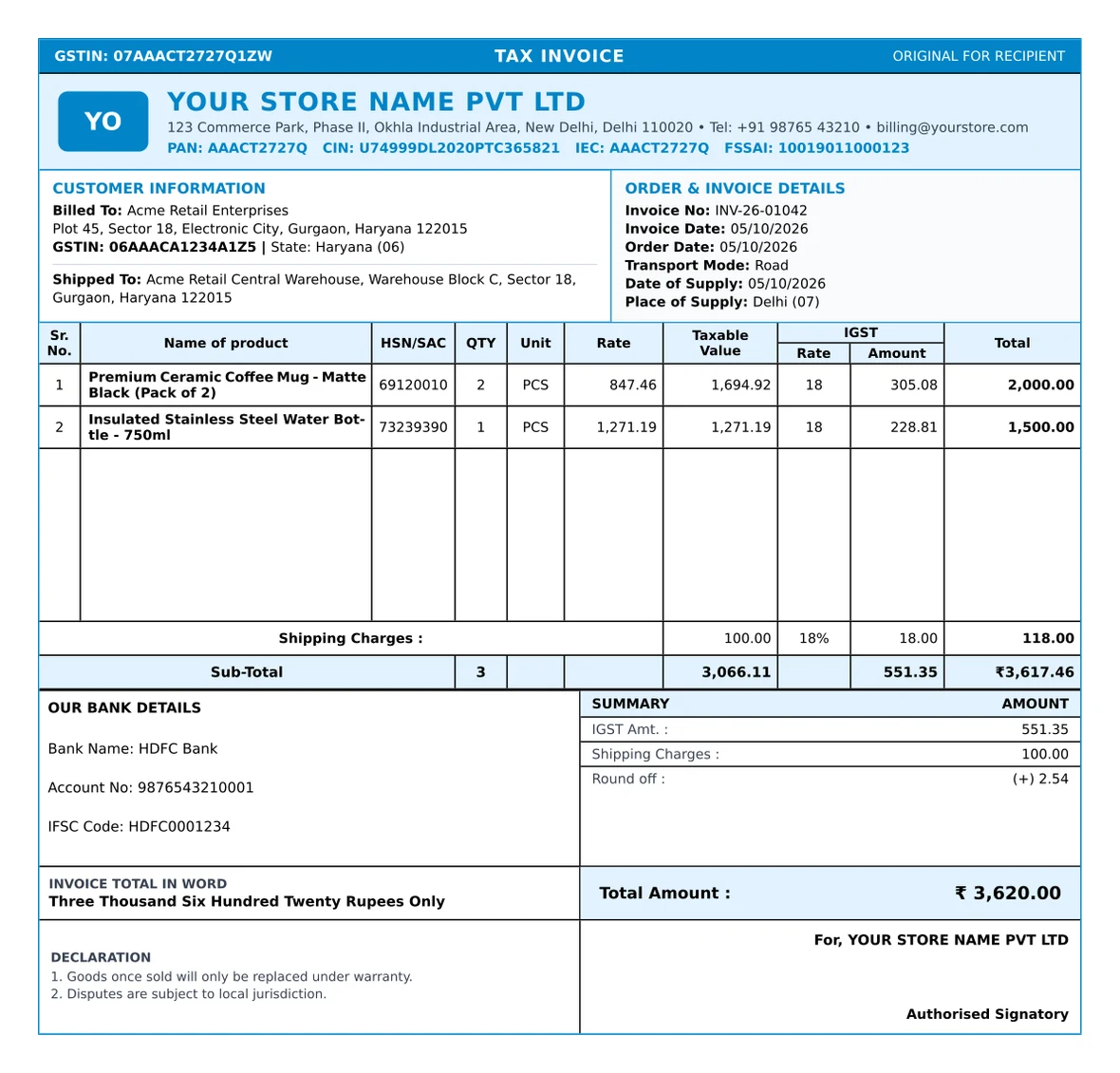
These five samples were generated by GST Point and include every field above. The business and buyer details are made up.
Questions people ask
Is there an official GST invoice format?
No. The law lists what an invoice must contain, not how it should look. Any layout is valid if it includes the mandatory fields.
Can the invoice number include letters?
Yes. Letters, numbers, hyphens and slashes are allowed, up to 16 characters, as long as the series is consecutive and unique for the financial year.
Is a signature required on a PDF invoice?
The rule asks for a signature or digital signature. Invoices issued electronically are commonly digitally signed or carry an authorised signatory line; ask your CA what your business should use.
Do I need to show HSN codes on B2C invoices?
If your turnover was up to ₹5 crore in the previous year, HSN codes are optional on B2C invoices. Above ₹5 crore, show 6-digit HSN codes on all invoices.
This guide is general information, not tax or legal advice. GST rules and dates change; check the details for your business with your CA. Last reviewed 5 October 2026.